
Executive Summary
Organisations rely on functional structures to deliver operational performance and projects and transformation programmes to introduce significant change. Both are essential, yet opportunities to improve enterprise performance can remain insufficiently addressed.
These opportunities often arise from the interaction of activities, decisions and resources across functions. The expertise needed to investigate them may exist within the business, but competing operational priorities and fragmented responsibilities can limit the capacity to understand and address them.
This paper proposes the Performance System Operating Model as one practical response.
The model offers an organisational arrangement for establishing and developing an enduring Enterprise Performance Practice: the capability to understand and deliberately improve the system through which enterprise performance is produced. It proposes a dedicated Performance Organisation alongside existing functional and project arrangements, led by a senior enterprise executive and supported by experienced specialists.
The Performance Organisation provides protected capacity to investigate systemic performance opportunities, develop and test hypotheses, and support evidence-based interventions with the business. Its design also addresses the authority, talent arrangements, incentives and organisational learning needed to sustain this work.
The Performance Organisation does not replace functional leadership or assume responsibility for delivering operational improvements. Material decisions remain with the relevant executive authorities, and operational leaders retain accountability for implementing agreed changes and sustaining their outcomes.
The intended result is an enterprise increasingly capable of understanding and improving its own performance. The Performance Organisation may remain a continuing home for enterprise-level expertise, or its role may evolve as the Practice becomes more deeply embedded across the business. The appropriate arrangement depends on the organisation's existing capabilities and continuing needs.
1. The Organisational Challenge
Where responsibility for performance improvement becomes fragmented
Functional structures deliver operational performance, develop specialist capability and continually improve their own operations. Projects and transformation programmes deliver significant change through established investment and governance arrangements. Many organisations also have continuous improvement, operational excellence and cross- functional management capabilities.
Nevertheless, opportunities to improve enterprise performance can remain insufficiently addressed.
Enterprise performance emerges from the interaction of activities and decisions across the organisation. Individual functions may achieve their objectives while the wider system produces avoidable costs, delays, lost opportunities or diminished customer value.
Understanding these outcomes requires examining how work happens across organisational boundaries, including the decisions, dependencies, incentives, information flows and practices that shape performance.
The relevant expertise is often dispersed throughout the business, while the people who possess it are committed to immediate operational responsibilities. Where an opportunity becomes sufficiently visible or urgent, organisations may establish a cross-functional task force or transformation initiative. These can be effective, but temporary resourcing and competing priorities may limit the depth or continuity of investigation. Learning may also be lost when teams disband.
The challenge is not simply to generate more improvement activity. It is to establish sufficient enterprise-level attention, authority and capacity to identify material opportunities, investigate their causes and act deliberately on what is learned.
Creating capacity to work on the business
Operational leaders cannot set aside customer needs, financial commitments and operational risks whenever an improvement opportunity emerges. Expecting them to absorb substantial diagnostic work alongside existing responsibilities can leave valuable opportunities unexplored.
The Performance System Operating Model addresses this constraint by providing protected capacity for enterprise-level performance work, while maintaining the connection to operational expertise and accountability.
How that capacity is established and sustained remains an organisational design choice, informed by the enterprise's existing capabilities, complexity and performance needs.
2. The Proposed Operating Model
The Enterprise Performance Practice is the enduring organisational capability through which an enterprise understands and deliberately improves the system that produces its performance. It encompasses the disciplines, expertise, leadership practices and learning needed to make improvement a continuing organisational capability.
The Performance Organisation is one possible structural arrangement for establishing, developing and sustaining that Practice. It provides dedicated leadership, expertise and protected capacity for enterprise-level performance work. Its longer-term role may vary: some enterprises may retain a continuing specialist organisation, while others progressively embed more of the Practice within existing structures.
The objective is to sustain the capability, not a particular organisational structure.
Three complementary organisational arrangements
The Performance System Operating Model proposes three complementary organisational arrangements, each with a distinct primary purpose.
| Dimension | Functional Organisation | Project / Transformation Organisation | Performance Organisation |
|---|---|---|---|
| Primary contribution | Run the business: deliver day-to-day operations and develop functional capability | Transform the business: deliver major change and new organisational capabilities | Improve the business: deliberately improve performance within the existing system of work |
| Core work | Operational decisions, execution, relationships and functional development | Major systems implementations, capability builds and transformation programmes | Systemic diagnosis, hypotheses, testing and performance intervention design |
| Time horizon | Continuing | Generally time-bound | Continuing mandate, with defined performance cycles |
| Talent | Functional specialists and leaders | Delivery specialists and business contributors | Permanent expert core with flexible participation from functional specialists |
| Accountability | Operational outcomes and functional capability | Delivery of approved transformation scope, outcomes and benefits | Quality of inquiry, performance contribution and organisational learning |
| Knowledge | Functional and operational expertise | Project knowledge and transition documentation | Cross-functional understanding and retained performance learning |
| Resourcing | Functional capacity | Programme or project funding under formal business cases and governance | Protected capacity with flexible specialist participation |
These arrangements operate alongside one another, not as a delivery hierarchy. Their primary purposes do not imply exclusive ownership of related activities. Functional teams continue to improve their own operations, transformation programmes deliver performance benefits, and existing improvement capabilities may already undertake some of the work envisaged for the Performance Organisation.
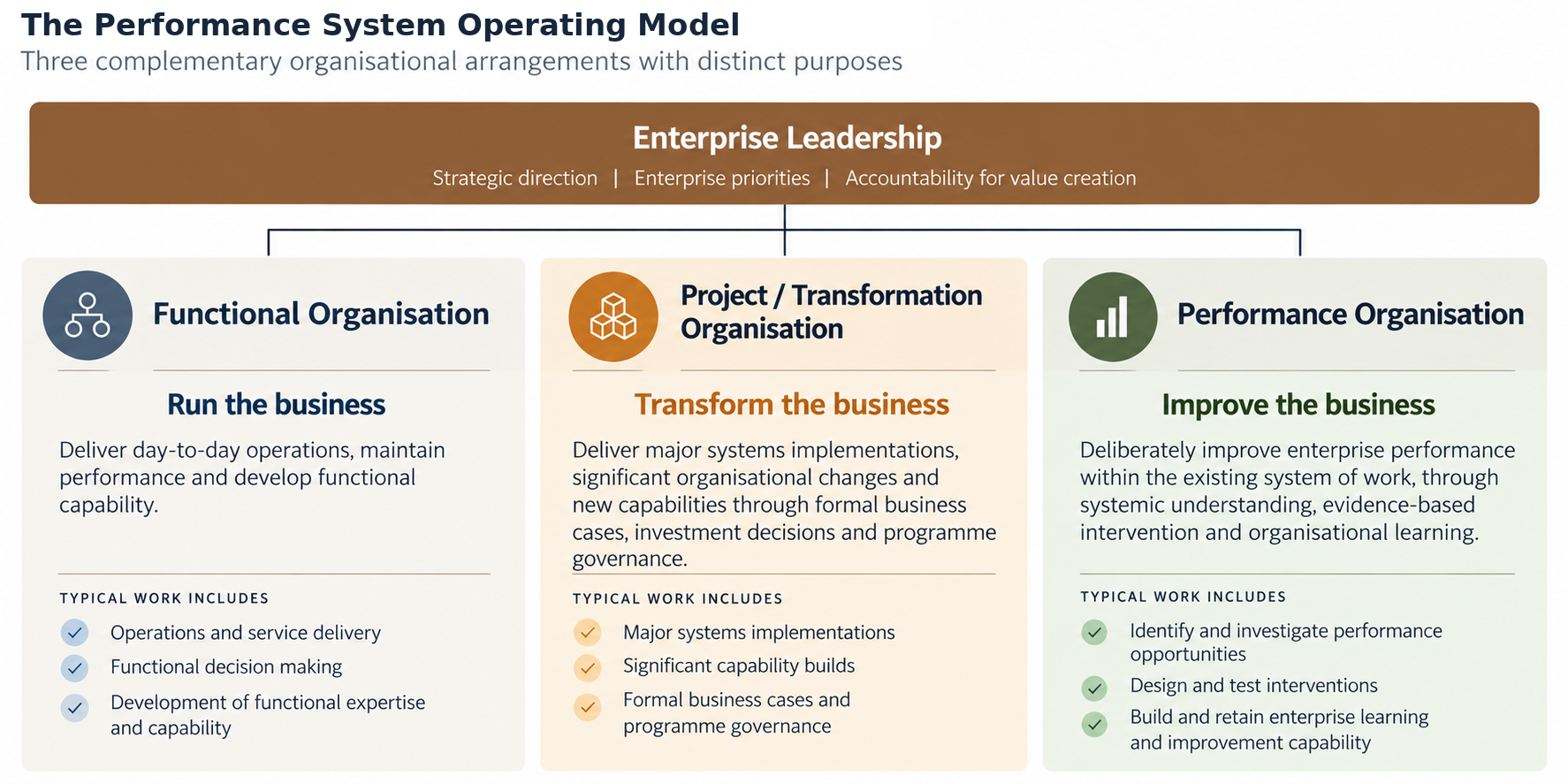
Figure 1. The Performance System Operating Model
The Performance Organisation
The Performance Organisation provides a continuing enterprise-level perspective on how value is created through the existing system of work. It draws on operational experience, specialist expertise, performance information and previous improvement efforts to identify and investigate opportunities that may not be adequately addressed within individual functions.
Its purpose is to make material opportunities visible, establish a sound basis for decisions, support selected interventions and strengthen the business's ability to undertake similar work in future.
It does not own every improvement opportunity or assume operational accountability for implementing agreed changes.
The blueprint uses a dedicated Performance Organisation to illustrate how leadership, authority and protected capacity might be brought together. This is a considered design proposition, not a requirement for every enterprise to establish a new standalone function. The appropriate structure will depend on existing capabilities and organisational needs.
3. Leadership, Mandate and Decision Rights
A trusted enterprise-level leader
The model requires a senior leader with sufficient authority, credibility and organisational access to examine performance across functional boundaries.
In a large enterprise, the preferred arrangement may be a leader reporting directly to the CEO or COO, depending on the organisation's executive structure.
The purpose of this position is not to establish another layer of approval. It is to provide the mandate and stewardship necessary for enterprise performance work to proceed without being continually subordinated to functional priorities or conventional project governance.
The Performance Leader is accountable for selecting and prioritising investigations, the effectiveness of the Performance Organisation, the quality and integrity of its work, the deployment and development of its people, and its contribution to enterprise performance. Anyone in the enterprise may recommend an opportunity for investigation; the Performance Leader determines which merit attention within the standing mandate.
This requires strong relationships with the executive team and functional leaders, alongside the independence to surface performance constraints that may be difficult or inconvenient to address.
Authority to examine the system of work
The Performance Organisation operates under a standing enterprise mandate to investigate how value is created through operations and where that value could be improved.
Within agreed boundaries, the Performance Leader may select and initiate diagnostic work, assemble expertise and pursue emerging hypotheses without requiring a separate business case for each investigation. The Leader may also authorise modest, low-risk experiments within delegated budgets and established safeguards, with the agreement of affected operational leaders.
This discretion is important. Requiring formal investment approval before every inquiry risks preventing the organisation from discovering the very opportunities it was established to identify.
The mandate is nevertheless bounded by the organisation's purpose, established controls and the need for responsible use of information and resources.
It is not an unrestricted investigative authority. Its focus remains the system through which enterprise performance is produced.
Separating inquiry, decision and delivery
The model distinguishes inquiry and experimentation, material decisions, and operational delivery. These accountabilities use existing enterprise authorities rather than adding a separate governance layer.
The Performance Leader selects and prioritises inquiries. Teams assembled for particular performance opportunities investigate causes, develop and test hypotheses, and recommend interventions supported by available evidence. Small, low-risk experiments may proceed under delegated authority with operational agreement.
Material investments and consequential operational changes proceed through the relevant existing executive or investment decision authority, taking account of enterprise value, strategic priorities, risk, resources and competing demands.
Operational leadership retains accountability for implementing agreed changes and sustaining their contribution to performance.
The Performance Organisation may participate directly in implementation where the business lacks the capability or capacity to undertake the work itself. In these circumstances, operational accountability remains with the business, and the Performance Organisation's involvement should strengthen the business's ability to sustain the improvement.
These accountabilities allow the Performance Organisation to exercise independent judgement without becoming a parallel operational authority.
4. Organising Performance Work
A continuing core with flexible expertise
The Performance Organisation undertakes its work through performance teams assembled around specific enterprise performance opportunities. Each team brings together relevant expertise from the dedicated Performance Organisation and, where needed, specialists from across the business. Team composition and duration are determined by the nature of the work, rather than a prescribed organisational structure.
A permanent core of experienced specialists provides continuity, while flexible participation from functional experts brings current operational knowledge and experience.
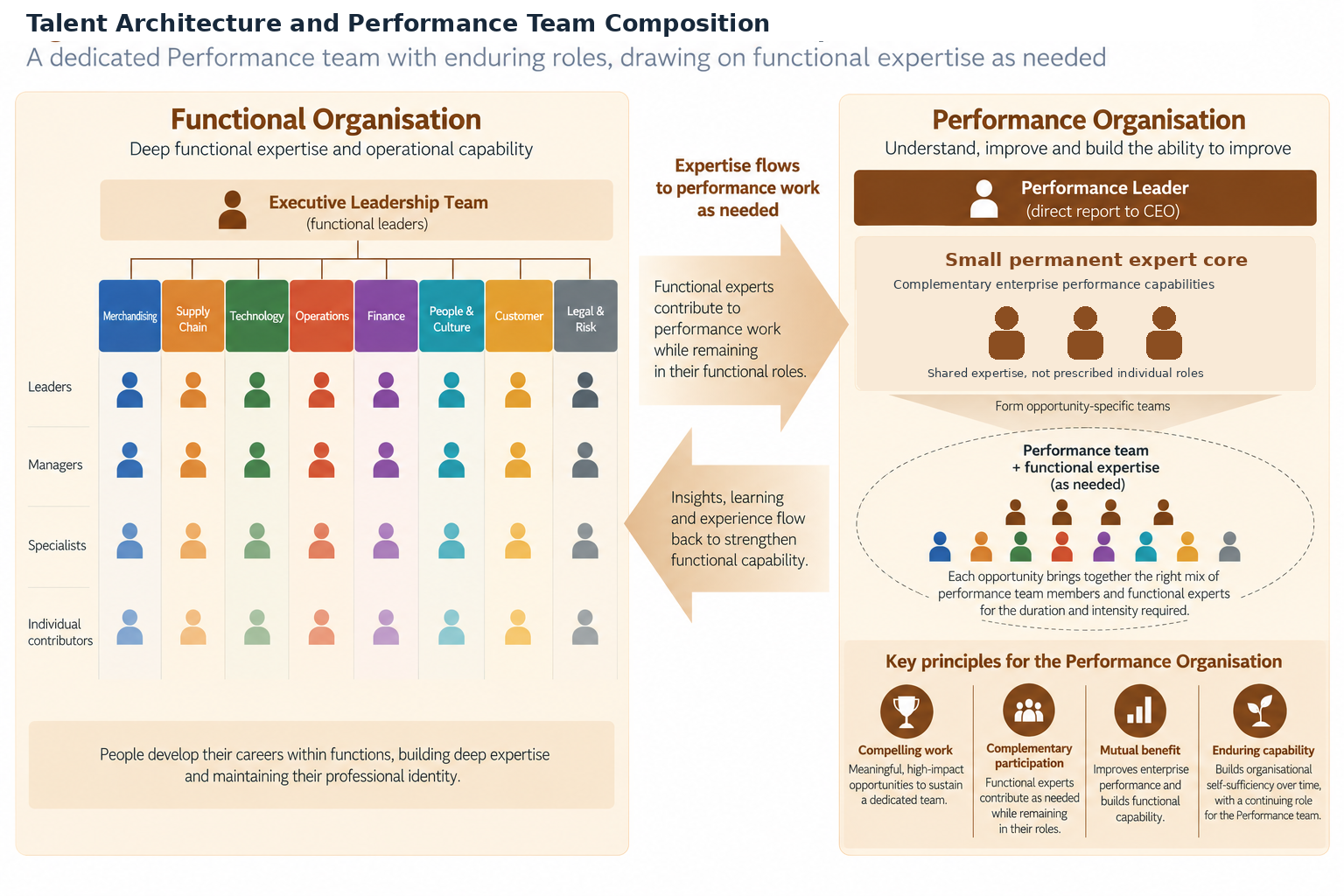
Figure 2. Talent Architecture of the Performance Organisation
An illustrative arrangement combining a small permanent core of experienced specialists with access to functional expertise, bringing people together around specific performance opportunities as needed.
The dedicated Performance Leader and permanent expert core provide an enduring professional home for enterprise performance work. Functional specialists contribute to particular opportunities as required while retaining their substantive roles and professional identities. The arrangement does not require a pool of unassigned staff or a prescribed number of standing teams.
Selecting work and collaborating with operations
Anyone may bring a performance opportunity to the Performance Leader, who judges its potential enterprise significance and prioritises it against existing work and available capacity. The mandate establishes an expectation of collaboration, not unrestricted access to functional resources. Specialists and leaders manage meetings, contributions and competing priorities through normal professional working relationships; sustained participation is agreed through ordinary resource planning.
The Performance Organisation maintains proportionate visibility of its priorities, investigations and findings. Differences of interpretation are worked through with affected leaders using evidence and existing leadership relationships. Where a proposal is declined or deferred, the evidence and reasoning are retained. Once operational changes are agreed, the Performance Organisation follows outcomes with the accountable leaders and captures learning without assuming operational ownership.
The performance cycle
The specialist team must apply a disciplined, iterative pattern of inquiry, intervention and learning.
1. Recognise the opportunity.
An issue or opportunity emerges through operational experience, performance information, strategic priorities, previous investigations or observations of the system of work.
2. Establish the performance question.
The team works with relevant leaders and practitioners to understand the enterprise outcome at stake, the boundaries of the inquiry and the potential significance of the opportunity.
3. Develop and examine hypotheses.
The team considers what may be constraining performance, how a proposed change might improve it and what evidence would support or challenge that reasoning.
4. Test and develop interventions.
Where appropriate, the team undertakes analysis, modelling, controlled experiments or limited trials. Operational specialists remain involved in interpreting findings and assessing practical consequences.
5. Support enterprise decisions.
The team presents the evidence, expected contribution, uncertainties and implications of potential interventions. Material changes proceed through the appropriate executive decision process.
6. Enable implementation.
Agreed changes are undertaken through operational leaders and their teams, with the Performance Organisation contributing expertise where required.
7. Assess outcomes and retain learning.
The organisation examines what changed, whether the expected performance effect occurred, what other consequences emerged and what should inform future decisions.
The cycle is deliberately iterative. New evidence may require an earlier hypothesis to be revised, a proposed intervention to be abandoned or the scope of inquiry to change.
Not every cycle will result in an implemented change. A well-conducted investigation may establish that an apparent opportunity is less material than expected, that a proposed intervention would introduce unacceptable consequences or that an alternative approach deserves attention.
Such work must still produce useful, evidenced learning.
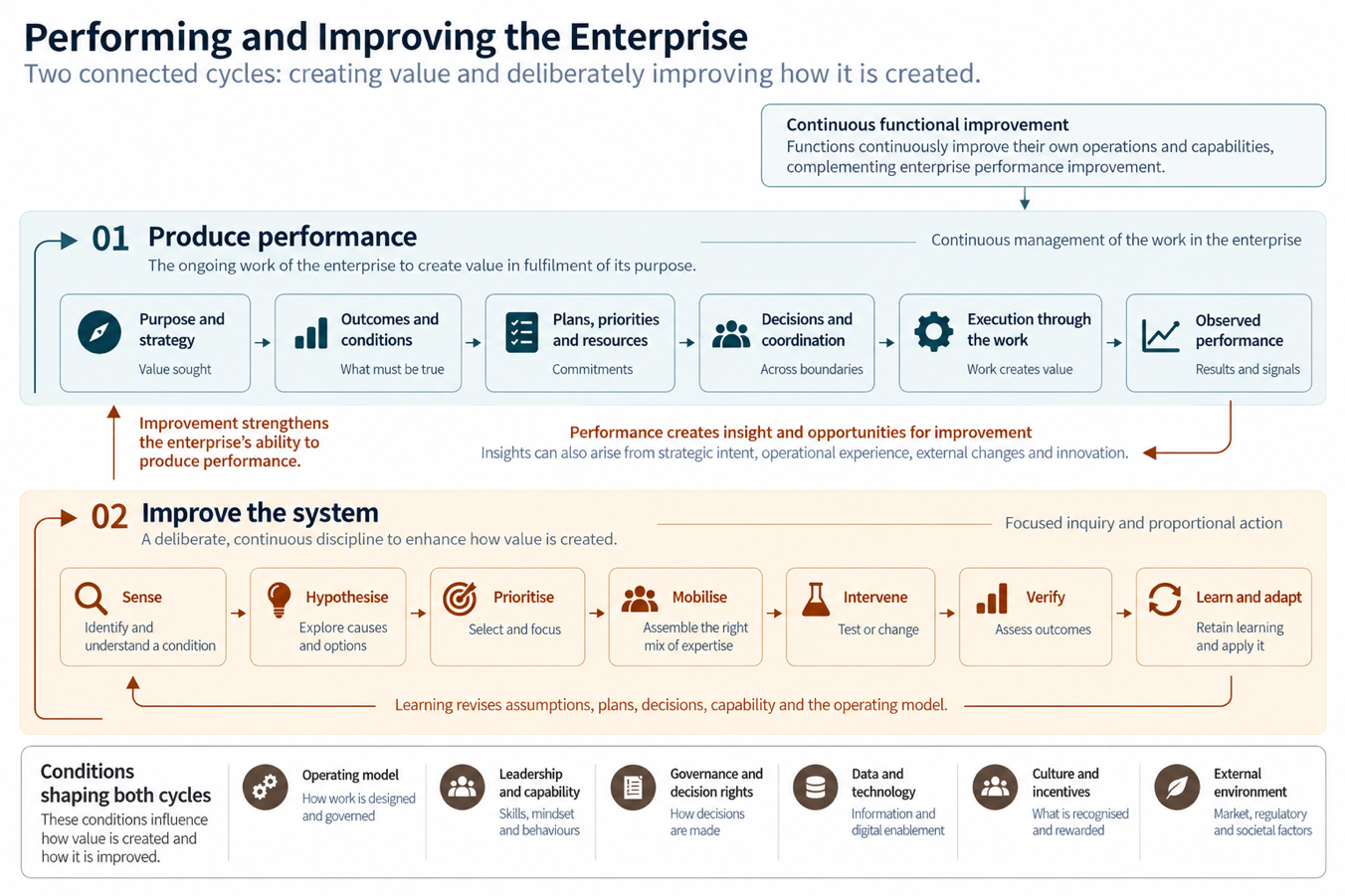
Figure 3. Performing and Improving the Enterprise
The two connected cycles distinguish the ongoing production of performance from deliberate inquiry and improvement of the system through which value is created. Functional teams also continuously improve their own operations and capabilities; this complements, rather than reports into, enterprise performance improvement. The shared organisational conditions influence both cycles. The stages illustrate an iterative discipline, not mandatory approval gates.
Performance accountability
Members of the Performance Organisation are accountable for meaningful contribution.
That contribution should be demonstrated through performance impact, material organisational learning or the development of capability that enables the business to improve its own performance.
Learning is not a substitute for results where results could reasonably have been achieved. Nor should teams be rewarded for generating activity, reports or hypotheses without establishing their significance.
The quality of work should be assessed through the rigour of inquiry, the relevance of the opportunity, the evidence produced, the contribution to decisions and the outcomes that follow.
5. The Talent and Career Architecture
Functional mastery remains essential
The Performance Organisation depends on the expertise developed within functional operations.
A successful merchandising specialist, for example, may possess deep commercial judgement, supplier knowledge, category expertise and an understanding of customer behaviour. These capabilities are valuable in their own right and may support a substantial career in functional leadership.
The Performance System Operating Model does not treat movement into the Performance Organisation as a superior career choice.
Rather, it creates an additional pathway through which experienced specialists can apply and develop their expertise.
Developing enterprise breadth without losing professional identity
A merchandising specialist contributing to a performance team may investigate the interactions between buying decisions, inventory, distribution, store execution and customer availability.
This exposure can deepen their understanding of how commercial decisions affect the wider enterprise.
Importantly, the individual should retain their professional identity and connection with Merchandising.
The arrangements should distinguish between permanent members of the Performance Organisation, whose roles and careers are based there, and functional specialists who contribute to particular investigations while retaining their substantive positions and reporting relationships.
Functional leaders remain involved in agreeing the contribution of their specialists and understanding implications for their areas. Permanent performance specialists maintain professional connections with relevant disciplines, allowing expertise and learning to move in both directions.
Career pathways and access to functional expertise
Permanent appointments to the Performance Organisation should be supported by deliberate talent arrangements, including career development, succession, performance assessment, remuneration and opportunities for future movement between functional and enterprise-level roles.
The Performance Organisation also draws on expertise from across the business. Brief contributions can be arranged through normal professional collaboration, without formal assignment processes. Where participation requires a sustained commitment or materially affects operational responsibilities, the relevant functional manager should be involved in agreeing the contribution and managing competing priorities.
The Performance Organisation should offer a credible professional home for experienced specialists, rather than being perceived as a temporary assignment or a departure from functional career progression. Individuals may build careers within the Performance Organisation, move between organisational arrangements or return to functional leadership with broader enterprise experience.
Experience in enterprise performance work can strengthen leadership capability, but does not replace the operational and people leadership experience required for many senior executive positions.
Mastery-based progression
The Performance Organisation should provide meaningful career progression for people whose principal contribution lies in expertise, judgement and enterprise impact rather than increasing numbers of direct reports.
Progression may recognise the depth of professional mastery, the complexity of performance challenges addressed, the quality of reasoning, the contribution to enterprise outcomes and the ability to develop capability in others.
This allows the organisation to recognise highly capable specialists without requiring them to enter conventional managerial hierarchies.
6. Performance Management and Incentives
Recognising contribution beyond functional boundaries
The model depends on functional leaders and performance specialists working in the interests of the enterprise.
Yet organisational measures and incentives may primarily recognise outcomes within individual functions.
A leader who releases a highly capable specialist into the Performance Organisation may incur an immediate operational cost while the resulting benefit is realised elsewhere.
Similarly, a functional leader may be asked to support an intervention that creates greater enterprise value but introduces additional complexity or cost within their own area.
These tensions cannot be resolved through appeals to collaboration alone.
The organisation should deliberately examine whether its performance management and reward arrangements recognise enterprise contribution alongside functional accountability.
This does not require replacing functional measures with a single enterprise measure.
Functional leaders must remain accountable for the outcomes, people, relationships and capabilities within their responsibilities.
However, assessment should also recognise meaningful contributions beyond those boundaries, including the development and movement of talent, participation in enterprise interventions and decisions that improve wider organisational performance.
Rewarding performance members
Performance Organisation members should be recognised for demonstrated mastery, the quality of their contribution and the value created through their work.
Assessment should distinguish between realised performance impact and evidenced organisational learning.
It should also recognise the contribution individuals make to strengthening operational capability, rather than rewarding only the work retained within the Performance Organisation.
A remuneration architecture based on these principles may include professional mastery levels, assessment of enterprise contribution and recognition of sustained outcomes.
The precise arrangements require careful design. Financial attribution can be uncertain, interventions may take time to produce results, and some of the most valuable investigations may demonstrate that a proposed change should not proceed.
Reward systems must avoid encouraging exaggerated benefit claims, unnecessary interventions or the selection of only easily measurable opportunities.
The objective is not to create an elite remuneration system. It is to align recognition with the contribution the organisation is asking people to make.
7. Retaining Organisational Knowledge and Learning
An enduring Enterprise Performance Practice requires organisations to build on what they have previously examined, attempted and learned.
Performance investigations generate understanding that may remain valuable even when an intervention is not implemented. An organisation may investigate several possible responses to a performance constraint, approve one and defer or reject others. The evidence, assumptions and reasoning behind those decisions should not be lost when priorities change or people move on.
The Performance Organisation should therefore establish a proportionate discipline for retaining significant performance hypotheses, findings, decisions and outcomes, including what remains uncertain. This knowledge should be accessible to relevant leaders and practitioners so that future investigations can build on earlier work rather than repeat it.
Existing systems may be sufficient to support this discipline. The important requirement is not a particular technology, but the organisation's continuing ability to use and develop its accumulated understanding of enterprise performance.
8. Funding and Resource Decisions
The Performance Organisation needs sufficient standing resources to fulfil its mandate.
Its operating capacity should not depend on preparing a separate investment case for every inquiry. That would undermine the ability to investigate emerging opportunities and respond to evidence as it develops.
A practical funding arrangement can distinguish between three levels of commitment.
The first is the continuing cost of maintaining the Performance Organisation, including its leadership, specialist expertise and diagnostic capacity. This is established through the organisation’s normal resource and budget arrangements.
The second is modest expenditure required for investigations, experiments or limited trials. Appropriate delegated authority can allow this work to proceed without disproportionate governance.
The third is material investment required to implement significant operational changes. These decisions remain subject to the organisation's established executive and investment accountabilities.
Some organisations may choose to establish a dedicated Enterprise Performance Fund. Others may achieve the same objective through standing budgets and delegated authorities.
The important principle is to protect the speed and independence of diagnostic work while preserving responsible decision-making over consequential investment and operational change.
9. An Illustrative Application: Total Cost to Serve
Consider a retailer seeking to improve its understanding of Total Cost to Serve.
Merchandising, Supply Chain, Finance, Technology and Store Operations each possess information relevant to the cost of serving customers.
The challenge is not simply to assemble data. It is to understand how decisions and activities across these functions influence the total cost of delivering value.
Buying decisions may affect supplier arrangements, order quantities, inventory, distribution activity and store handling. Each decision may be reasonable within its own function while creating consequences elsewhere.
Under the proposed model, a team could bring together experienced commercial, operational, financial and analytical expertise to examine these interactions.
The team would begin by establishing which enterprise outcomes warrant attention and where existing measures may provide an incomplete picture.
It could then develop hypotheses about the principal cost drivers, examine relevant data and operational practices, and work with functional specialists to test possible interventions.
For example, an investigation might consider whether changes to ordering practices could reduce downstream handling and inventory costs without compromising supplier economics or product availability.
Where the evidence supports an intervention, the relevant operational leaders would assess the proposed change and its implications. Material decisions would proceed through enterprise leadership where required.
The Performance Organisation could support implementation where additional expertise is needed, while operational teams retain responsibility for ongoing execution.
The team would subsequently examine whether the expected effects occurred, including unintended consequences, and preserve the learning for future decisions.
This is an illustrative application of the proposed operating model, not a documented implementation or claim of demonstrated results.
Its significance lies in showing how protected cross-functional expertise can help an organisation investigate performance outcomes that are difficult to understand through individual functional measures alone.
10. Establishing the Performance System Operating Model
The model should be established progressively, with sufficient discipline to demonstrate value before committing to a larger organisational structure.
Stage 1 — Establish the mandate
The CEO or COO appoints an accountable enterprise leader and agrees the purpose, scope and authority of the Performance Organisation.
The mandate defines the types of opportunities it will examine, its discretion to initiate diagnostic work, its relationship with functional leadership and the decision rights governing material interventions.
The executive team also establishes expectations for transparency, performance contribution and organisational learning.
Stage 2 — Understand existing capability
Before creating new roles or structures, the leader examines how the organisation currently identifies and addresses enterprise-level performance opportunities.
This includes existing operational excellence, transformation, planning, organisational design and continuous improvement capabilities.
The intention is to identify what can be built upon, where capacity is constrained and which capabilities are missing.
Stage 3 — Assemble initial capacity
An initial performance capability is established using a small number of experienced specialists with complementary expertise.
Functional expertise is accessed through normal professional collaboration, with managerial agreement where participation requires a sustained commitment or affects operational responsibilities.
Permanent appointments should provide credible career development and progression opportunities.
The initial design should avoid creating unnecessary organisational complexity.
Stage 4 — Select and investigate a material opportunity
The Performance Organisation undertakes an initial inquiry into an opportunity with sufficient enterprise significance to justify its attention.
Selection should consider potential value, the need for cross-functional understanding, the availability of evidence and the organisation's ability to act on the findings.
The work should establish both the quality of the diagnostic approach and the practicality of the operating relationships.
Stage 5 — Support decisions and implementation
Findings are considered with the relevant executive and operational leaders.
Where an intervention is approved, delivery arrangements are agreed, including the role of the Performance Organisation and the capabilities to be transferred into operations.
Progress is reviewed against the expected contribution, and emerging evidence is used to refine the approach.
Stage 6 — Assess outcomes and develop the capability
The initial cycle concludes with an assessment of performance effects, the quality of decisions, the learning retained and the capability developed within the business.
The executive team then determines how the Performance Organisation should evolve.
This may involve additional expertise, changes to resourcing or greater involvement of operational leaders in subsequent performance cycles.
Expansion should follow demonstrated value and organisational need, not the assumption that a larger Performance Organisation is inherently more effective.
11. AI and the Changing System of Work
Artificial intelligence and increasingly capable automation are changing how organisations perform work, use expertise and make decisions.
Activities that previously required substantial coordination or manual analysis may be undertaken differently. Smaller groups may gain access to capabilities that once depended on larger functional structures.
These developments could enable organisations to operate with greater responsiveness and less dependence on traditional hierarchies.
However, technological capability does not automatically produce organisational adaptability.
The effects of AI depend on how it interacts with existing decisions, accountabilities, incentives, information, relationships and operational practices.
Improvements within individual functions may not translate into greater enterprise value if the wider system remains poorly understood or insufficiently coordinated.
AI may also change the work of the Performance Organisation itself. Analysis, modelling, information retrieval and aspects of coordination may become more efficient, allowing performance specialists to concentrate more attention on judgement, organisational relationships, intervention design and learning.
The implications for organisational structure and workforce size will vary.
The Performance System Operating Model is therefore not predicated on functional hierarchies disappearing or the Performance Organisation continually expanding.
Its relevance lies in providing a deliberate means of understanding and improving enterprise performance as the system of work evolves.
12. Sustaining the Enterprise Performance Practice
The enduring objective of the Performance System Operating Model is to strengthen the enterprise's ability to understand and improve its own performance, not to preserve or eliminate a particular organisational structure.
Initially, the Performance Organisation may need to undertake substantial diagnostic work, demonstrate the value of cross-functional inquiry and establish disciplined approaches to intervention and learning.
As experience accumulates, operational leaders and practitioners should become more capable of recognising enterprise dependencies, examining performance constraints and undertaking improvements themselves.
As the Practice matures, the Performance Organisation may focus more selectively on complex opportunities, emerging systemic challenges, professional development and enterprise-level stewardship.
Its size and composition may change accordingly.
Some enterprises may retain a substantial dedicated Performance Organisation. Others may embed more of the relevant expertise and disciplines within existing structures and retain a smaller specialist group. Neither outcome is inherently preferable.
The appropriate arrangement depends on the organisation's complexity, maturity and continuing need.
The model should therefore be assessed against three questions:
- Is the organisation creating greater enterprise value through the improvements it undertakes?
- Is its understanding of how performance is produced becoming stronger and more accessible?
- Are leaders and practitioners becoming increasingly capable of improving enterprise performance, with appropriate support for challenges that extend beyond individual functions?
The lasting measure of success is not the number of teams assembled, the volume of investigations completed or the size of the Performance Organisation.
It is the contribution made to enterprise performance and the enduring capability developed throughout the organisation.
Conclusion
Enterprise performance improvement requires more than capable functional leaders, successful transformation programmes or access to better information. It requires the capacity to understand how value is produced across the system of work, recognise opportunities that may otherwise remain fragmented and act deliberately on what is learned.
The Performance System Operating Model offers one practical way to establish that capacity.
Through an enterprise-level mandate, protected expertise, access to functional knowledge and deliberate organisational learning, it provides an arrangement for investigating and improving enterprise performance without displacing operational accountability.
The model is not a universal organisational prescription. Its purpose is to offer a practical starting point for organisations seeking to improve performance today while developing a stronger ability to improve themselves over time.
Acknowledgements and Illustration Credits
The Performance System Operating Model and the organisational arrangements described in this whitepaper were developed by Melanie Lisboa, drawing on professional experience in operating model design, organisational transformation and enterprise performance improvement.
Illustrations
- Figure 1. The Performance System Operating Model — Concept developed by Melanie Lisboa; visualisation produced with AI assistance.
- Figure 2. Talent Architecture of the Performance Organisation — Concept developed by Melanie Lisboa; visualisation produced with AI assistance.
- Figure 3. Performing and Improving the Enterprise — Concept developed by Melanie Lisboa; visualisation produced with AI assistance.
Connection to the Valde Enterprise Performance Essays
This whitepaper forms part of Valde's broader body of work exploring Enterprise Performance. It builds particularly on two essays: Improving Performance Is Not the Same as Building the Ability to Improve, which examines deliberate improvement and organisational learning; and Making Enterprise Performance an Enduring Organisational Capability, which considers how that discipline can become an enduring organisational capability.
The Performance System Operating Model offers one possible organisational response to these ideas. It is presented as a design proposition for consideration and adaptation, not as a prescribed or independently validated solution.
© 2026 Melanie Lisboa. All rights reserved.
Published by Valde Enterprise Performance Pty Ltd www.valde.com.au contact@valde.com.au
October 2026